Ask Joshua: Why Does My House Feel Dark Even With a Lot of Windows?
Hi Joshua,
My partner and I bought our home a few years ago and recently completed a remodel that we were really excited about. The strange thing is that even though our house has a lot of windows and gets natural light during the day, it still somehow feels dark and a little gloomy inside. Certain rooms especially never seem to feel bright or inviting no matter what we do.
We’ve tried opening all the curtains, adding lighter furniture, and changing a few light fixtures, but something still feels “off” and we can’t figure out why. It’s frustrating because we thought all the windows would automatically make the house feel airy and bright.
What are we missing, and what can we do to make our home actually feel lighter and more welcoming during the daytime?
Megan – Simi Valley, California
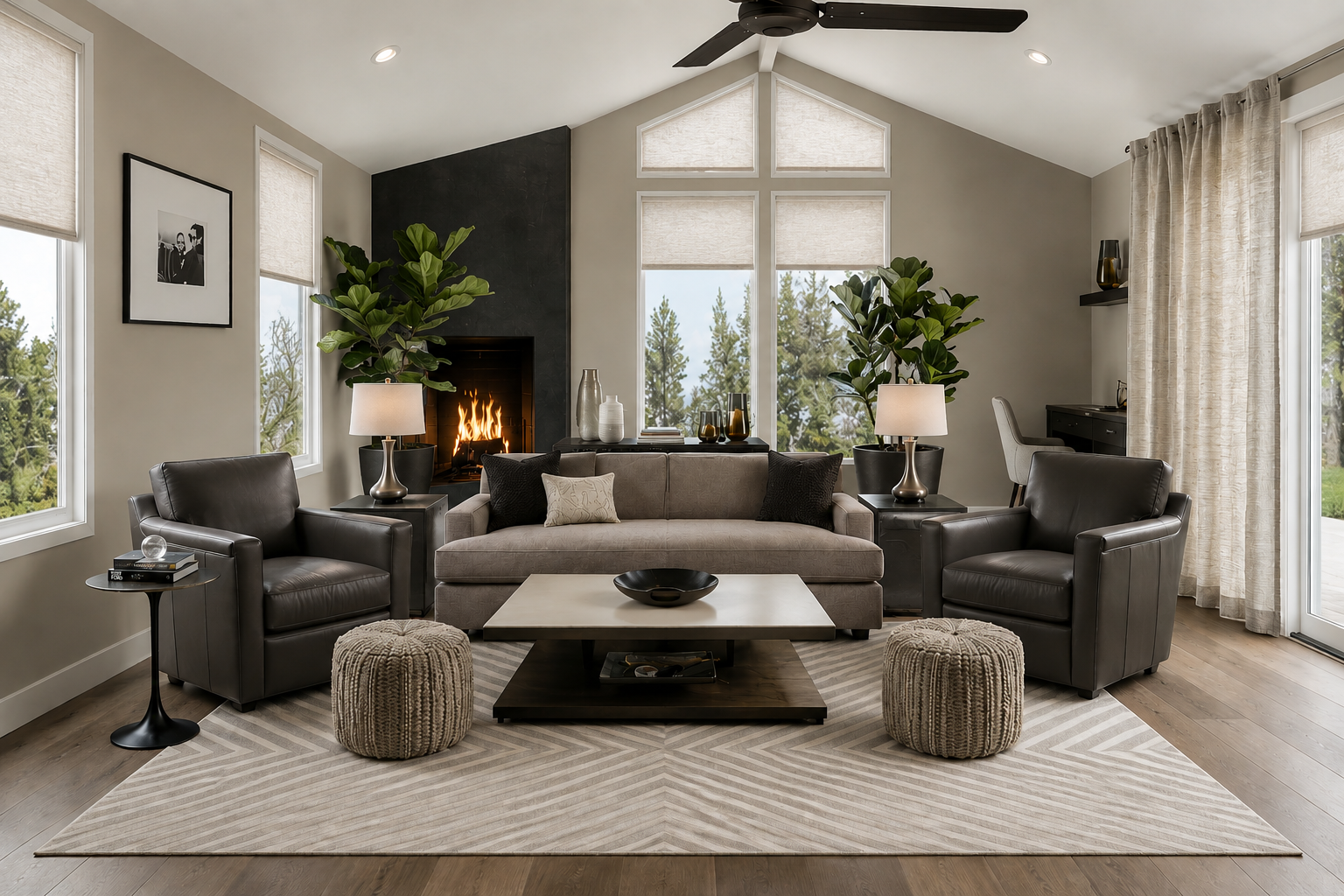
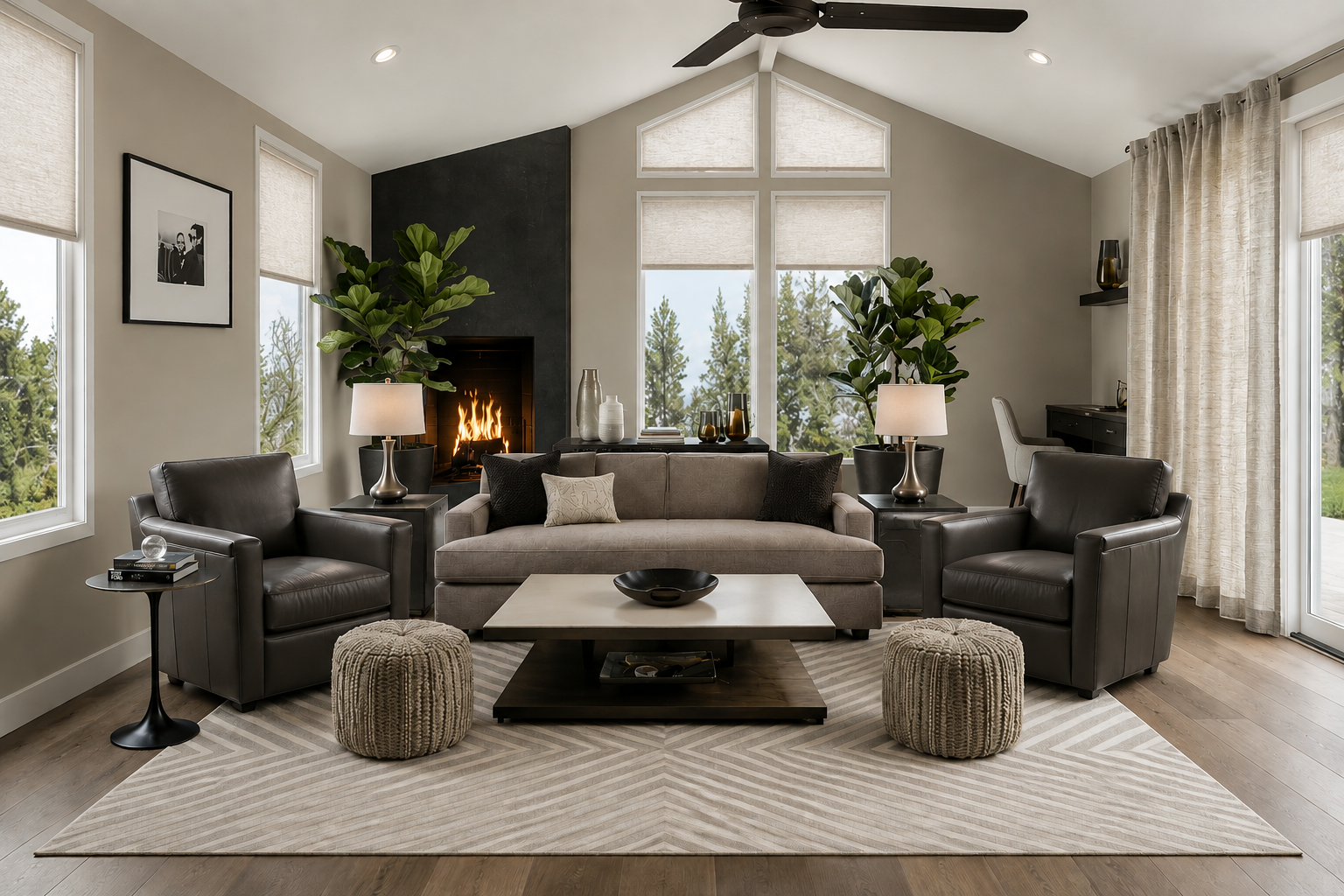
Modern rustic style living room designed by virtual interior designer Joshua Jones of JJones Design Co. Photorealistic AI-generated rendering created from Joshua’s original interior design concept for visual inspiration.
Megan,
This is actually a very common problem in remodeled homes, especially when homeowners expect large windows alone to make the house feel bright and airy. Natural light definitely helps, but there are many other things that affect how light moves through a home and how the space feels overall once everything is finished.
One of the biggest culprits I see is paint color undertones. A paint color may look light on a sample card or online, but once it is covering an entire room, the undertones can completely change the mood of the space. Some whites and light neutrals lean gray, beige, green, or even slightly muddy depending on the lighting conditions. Instead of reflecting light around the room, they can end up absorbing it and making the home feel heavier than expected.
Flooring also plays a much larger role than many people realize. Dark flooring, matte finishes, oversized dark rugs, and heavily textured materials can visually pull the brightness out of a room. I have seen homes with beautiful large windows still feel dim because nearly every finish in the space was absorbing light instead of bouncing it around.
Another thing that surprises homeowners is that natural light by itself is usually not enough. The brightest-feeling homes almost always use layered lighting during the daytime as well. Table lamps, floor lamps, sconces, under-cabinet lighting, and carefully selected light bulb temperatures help create balance throughout the home, especially in corners and deeper parts of rooms where sunlight does not fully reach.
Window treatments can quietly create problems too. Heavy drapery, woven shades, darker fabrics, or curtains mounted too narrowly around the windows can block more daylight than people think. Sometimes simply raising the curtain rod higher and extending the panels wider can make the windows feel significantly larger and brighter. The right drapery placement and fabric selection can make a surprisingly big difference in how bright a room feels during the daytime.
Furniture placement may also be contributing to the issue. Large furniture pieces placed directly in front of windows or bulky furniture with heavy visual weight can interrupt how light flows through the room. Even switching to furniture with lighter finishes or exposed legs can make a noticeable difference.
I also pay close attention to what is happening outside the home. Mature trees, covered patios, roof overhangs, neighboring houses, and even tinted windows can reduce how much usable daylight actually enters the interior. A house can technically have a lot of windows while still struggling to feel bright during the daytime.
One thing I notice often in remodels is that everything starts blending together tonally. Medium wood floors, warm beige walls, taupe furniture, and soft muted finishes may all individually look beautiful, but when combined throughout the entire house, the space can begin to feel visually flat and darker than intended. Sometimes what a home really needs is contrast, reflectivity, and variation in textures to wake the space back up.
Thankfully, this is usually something that can be improved without another major remodel. Small changes to lighting, paint, window treatments, furnishings, and material selections can completely shift how bright and welcoming a home feels during the day.
Warmly,
Joshua
Have interior design related questions? You can ask Joshua here.