
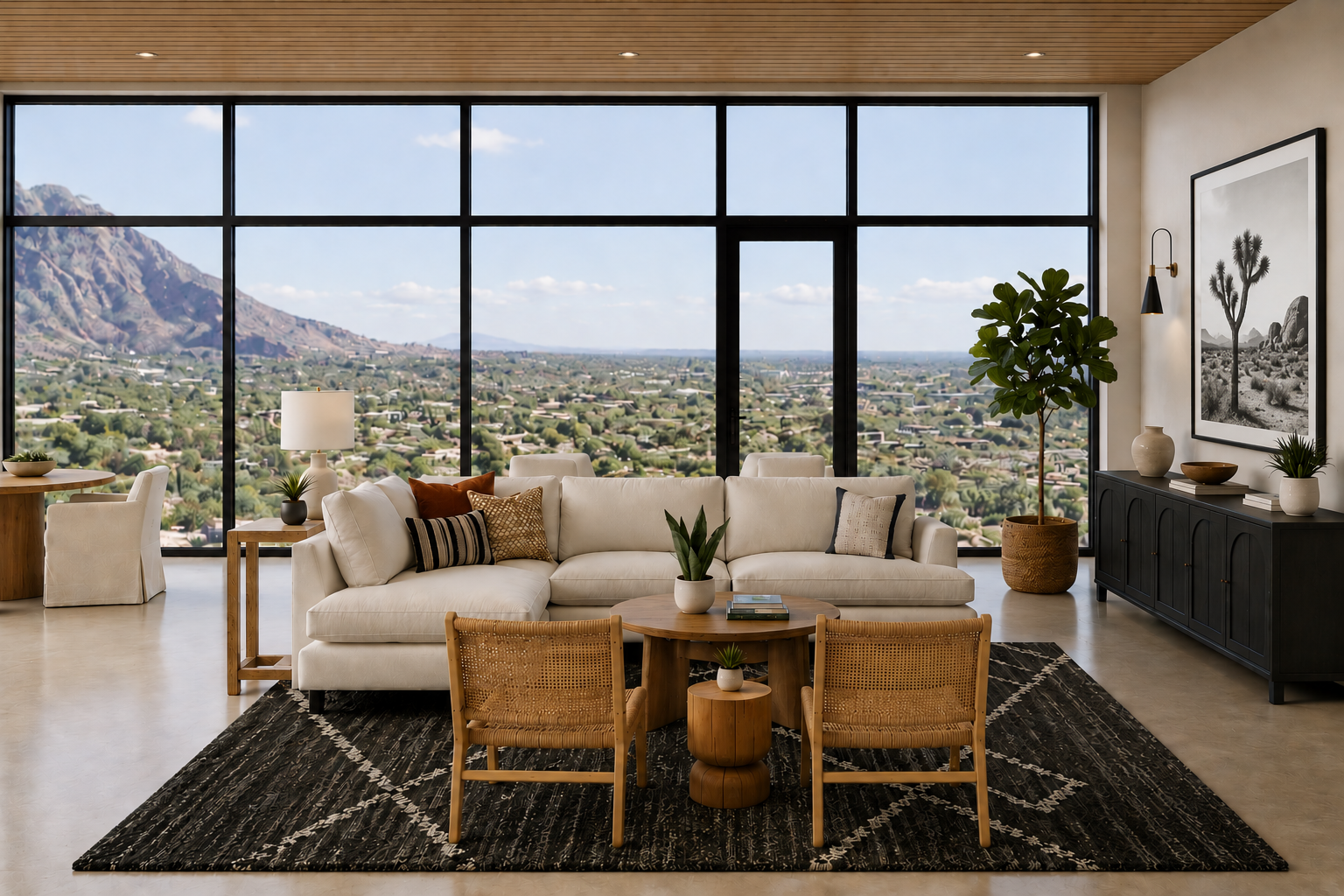
Masculine vs Feminine Interior Design: How to Create a Balanced Home
When people hear the words “masculine” and “feminine” in interior design, they often picture outdated stereotypes — dark leather rooms for men or soft pink spaces for women. In reality, interior design is much more layered and personal than that. Over the years, I’ve worked with many clients who naturally gravitate toward one aesthetic or the other, regardless of gender. Some people are drawn to spaces that feel bold, grounded, and structured, while others prefer interiors that feel softer, lighter, and more relaxed. Most homes actually fall somewhere in between.
The conversation around masculine and feminine interiors has evolved quite a bit in recent years. Today, these design styles are less about gender and more about the feeling a space creates. Masculine interiors often lean toward contrast, clean lines, darker tones, and architectural elements. Feminine interiors usually embrace softness, curves, texture, warmth, and layered details. Neither approach is better than the other, and some of the most beautiful homes combine elements from both to create a space that feels balanced and timeless.
One thing I’ve noticed as a virtual interior designer is that couples frequently have different design preferences when sharing a home. One person may prefer a moodier and more structured look, while the other wants the space to feel brighter, softer, and more inviting. The challenge is not choosing one style over the other — it’s finding the right balance that allows the home to feel cohesive and comfortable for everyone living there.
A well-designed home should feel personal, not forced into a category. The best interiors often blend strength with softness, contrast with comfort, and modern structure with inviting layers. That balance is what gives a home character and makes it feel lived in rather than staged.
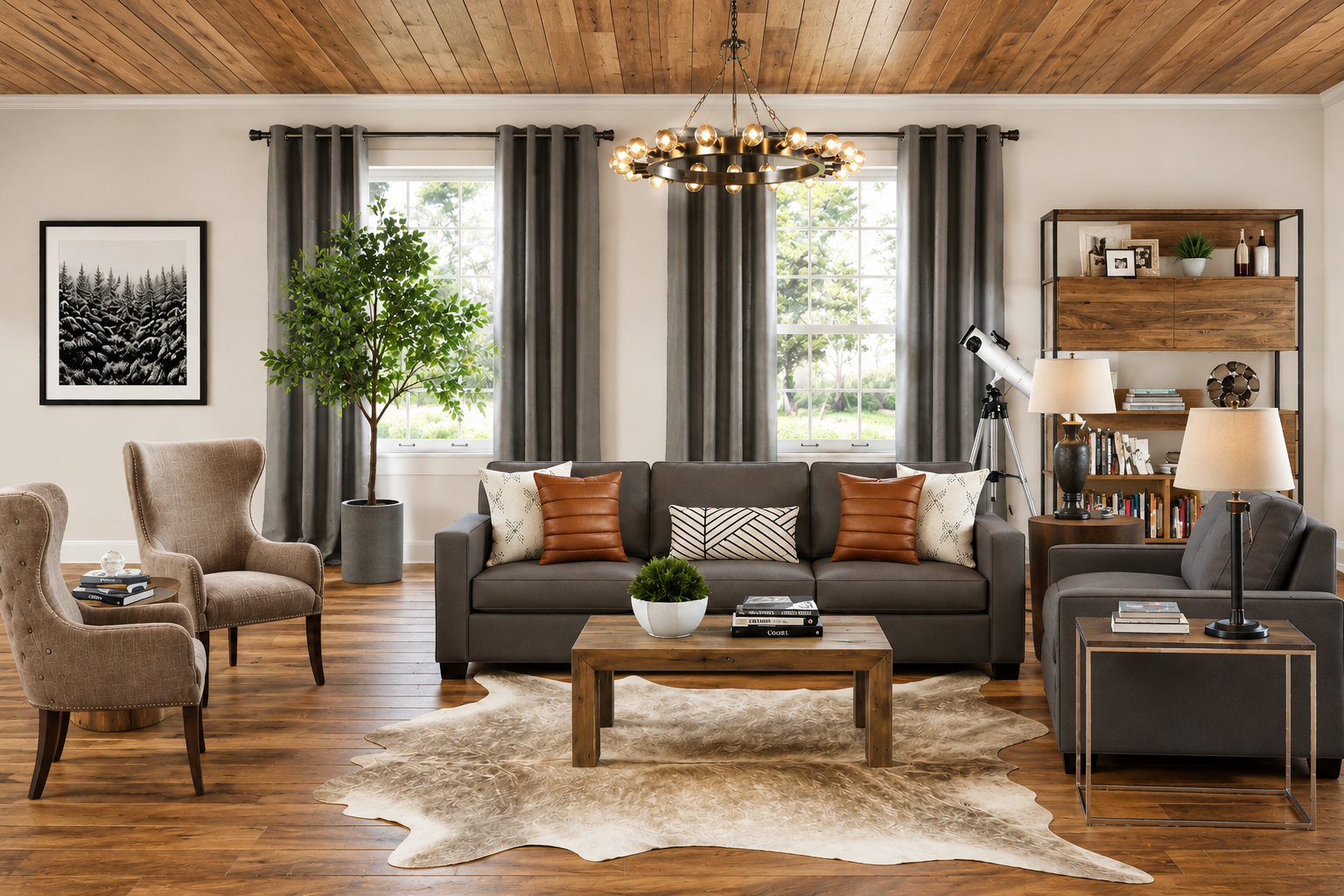
Masculine-leaning living room designed by virtual interior designer Joshua Jones of JJones Design Co. featuring warm wood tones, structured furniture, layered textures, and balanced modern rustic styling. AI-generated rendering based on an original interior design concept by Joshua Jones.
What Masculine Interior Design Really Means Today
Masculine interior design has changed quite a bit over the years. It is no longer just about dark colors, heavy furniture, or industrial loft spaces. Today, masculine interiors are more about creating a sense of grounding, structure, simplicity, and depth within a home. The overall feeling is often calm, refined, and intentional rather than overly rugged or dramatic.
One of the defining characteristics of masculine interiors is the use of strong architectural lines and contrast. You will often see clean-lined furniture, larger-scale pieces, and layouts that feel organized and uncluttered. Materials also play a major role in shaping the atmosphere. Wood, leather, stone, metal, concrete, and darker textiles are commonly used because they add richness and visual weight to a space.
Color palettes in masculine interiors tend to lean moodier and more neutral. Shades like charcoal, deep brown, olive green, navy blue, taupe, black, and warm grays are frequently used to create depth and sophistication. That does not mean the space has to feel dark or cold. Many modern masculine interiors balance these deeper tones with warmer woods, layered lighting, textured fabrics, and natural elements to keep the home feeling inviting.
Texture is another important detail that is often overlooked. A masculine space can quickly feel flat if everything is too sleek or monochromatic. This is why many well-designed masculine interiors include layered materials such as boucle accent chairs, textured rugs, linen drapery, aged brass finishes, or natural wood grains to soften the harder architectural elements.
I also think people sometimes misunderstand masculine design as being minimal or lacking personality. In reality, many masculine interiors feel highly curated. Artwork, sculptural decor, vintage pieces, books, and collected objects are often used in a more restrained way to create a space that feels thoughtful rather than overstyled.
One thing I have noticed with clients who gravitate toward masculine interiors is that they usually want their homes to feel relaxing, grounded, and visually calm. They are often drawn to spaces that feel sophisticated without being flashy and comfortable without feeling overly decorative.
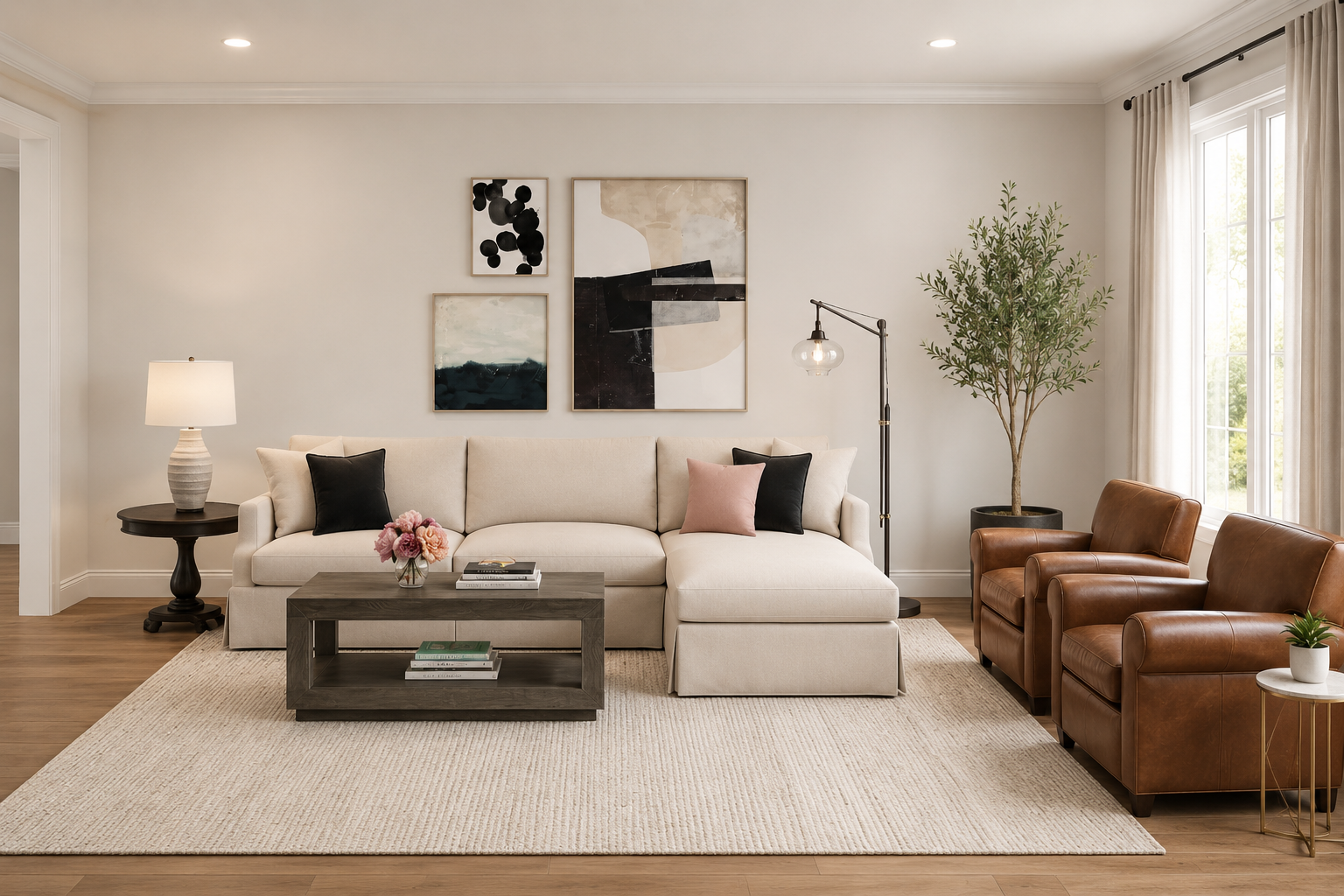
Modern living room designed by virtual interior designer Joshua Jones of JJones Design Co. featuring softer feminine interior design elements balanced with warm leather seating, structured furniture, layered textures, and neutral modern styling. AI-generated rendering based on an original interior design concept by Joshua Jones.
What Feminine Interior Design Really Means Today
Feminine interior design has also evolved far beyond the traditional stereotypes many people associate with it. It is not simply about pastel pink rooms, floral patterns, or overly decorative furniture. Modern feminine interiors are more about softness, comfort, warmth, movement, and layered details that make a home feel welcoming and emotionally connected.
One of the biggest characteristics of feminine interiors is the way they create a softer visual flow throughout a space. Curved furniture, rounded mirrors, arched details, softer silhouettes, and layered textiles all help create a more relaxed and approachable atmosphere. These spaces often feel lighter visually, even when they include darker colors or dramatic elements.
Color palettes in feminine interiors can vary widely depending on the style of the home. While soft tones like blush, cream, sage green, dusty blue, lavender, and warm whites are still commonly associated with feminine spaces, modern feminine interiors are not limited to pale colors. Rich jewel tones, earthy neutrals, terracotta, deep greens, and even black accents can still feel feminine when paired with softer textures and layered details.
Texture plays an enormous role in feminine design. Upholstered furniture, linen bedding, velvet accent chairs, woven materials, drapery, soft area rugs, and layered pillows all contribute to creating a home that feels warm and inviting. Feminine interiors also tend to embrace more decorative layering, but the best examples still feel intentional rather than cluttered.
Lighting is another detail that often shapes the feeling of feminine spaces. Softer ambient lighting, table lamps, sconces, candles, and warmer light temperatures can dramatically change the atmosphere of a room and make it feel more intimate and calming.
I think one reason many people are drawn to feminine interiors is because these spaces often feel emotionally comforting. They encourage relaxation and create a sense of ease within the home. Even in modern or minimalist spaces, feminine design elements can help prevent the room from feeling too harsh or sterile.
Some of the most beautiful feminine interiors today are the ones that balance elegance with livability. They feel collected over time, layered with texture, and designed for real everyday living rather than simply looking perfect in photos.
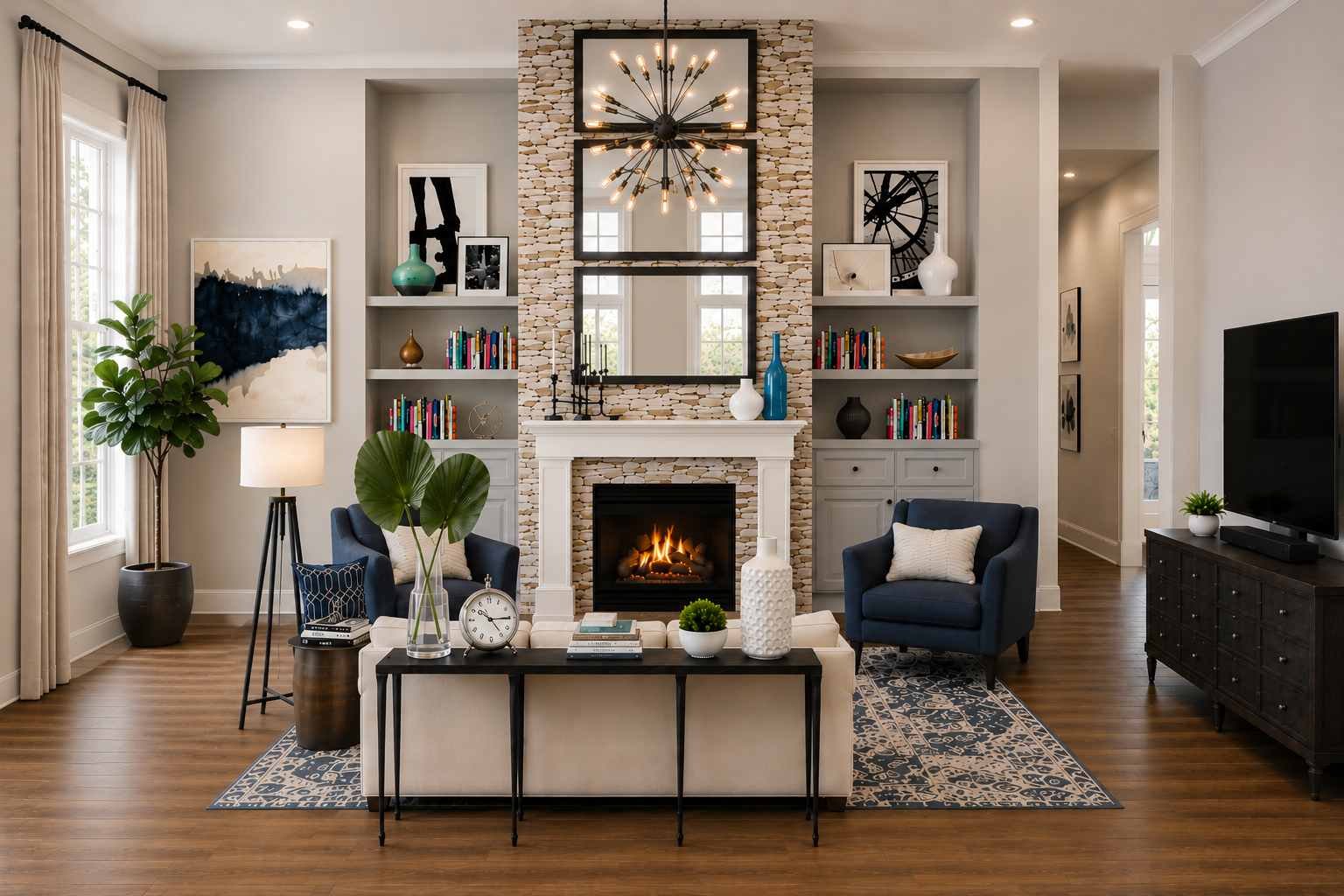
Modern living room designed by virtual interior designer Joshua Jones of JJones Design Co. featuring a balanced mix of masculine and feminine interior design elements through layered textures, structured furniture, softer styling, and warm contemporary finishes. AI-generated rendering based on an original interior design concept by Joshua Jones.
Why the Best Homes Usually Blend Both
One of the biggest misconceptions in interior design is the idea that a home has to feel either masculine or feminine. In reality, the most timeless and visually interesting interiors usually combine elements from both. That balance is often what gives a home depth, personality, and emotional warmth.
A space that leans too heavily in one direction can sometimes feel incomplete. Interiors that are overly masculine may start to feel cold, rigid, or uninviting if there is not enough softness layered into the design. On the other hand, spaces that lean too feminine without enough contrast or structure can occasionally feel overly delicate or visually busy. The balance between the two is often what makes a room feel comfortable, grounded, and lived in.
This is something I see often when designing homes for couples. One person may naturally gravitate toward darker tones, cleaner lines, and more minimal styling, while the other prefers softer textures, lighter palettes, and layered decor. The goal is rarely about choosing one style over the other. Instead, it becomes about finding ways to merge those preferences into a space that feels cohesive and authentic to both people.
Interestingly, many popular interior design styles today already blend masculine and feminine elements together naturally. A modern organic living room may feature a large structured sofa paired with soft linen drapery and curved accent chairs. Scandinavian interiors often combine clean architectural lines with warm woods and cozy textiles. Even industrial spaces, which traditionally lean masculine, frequently use softer lighting and layered fabrics to create balance.
Some of the most memorable homes are the ones that understand contrast. A room feels more dynamic when soft textures are paired with stronger materials like stone, metal, or dark wood. Curved furniture feels more intentional when balanced against clean architectural lines. Lighter palettes often become more sophisticated when grounded with darker accents and natural textures.
Balanced interiors also tend to age better over time. Spaces designed entirely around one extreme often feel trend-driven after a few years, while homes that thoughtfully mix softness, structure, warmth, and contrast usually feel more timeless and adaptable as styles evolve.
At the end of the day, the most successful interiors are the ones that feel personal. A home should reflect the people living in it rather than fitting neatly into a label. Masculine and feminine design elements are simply tools that help shape the mood and atmosphere of a space, and when used together thoughtfully, they often create homes that feel the most inviting and complete.
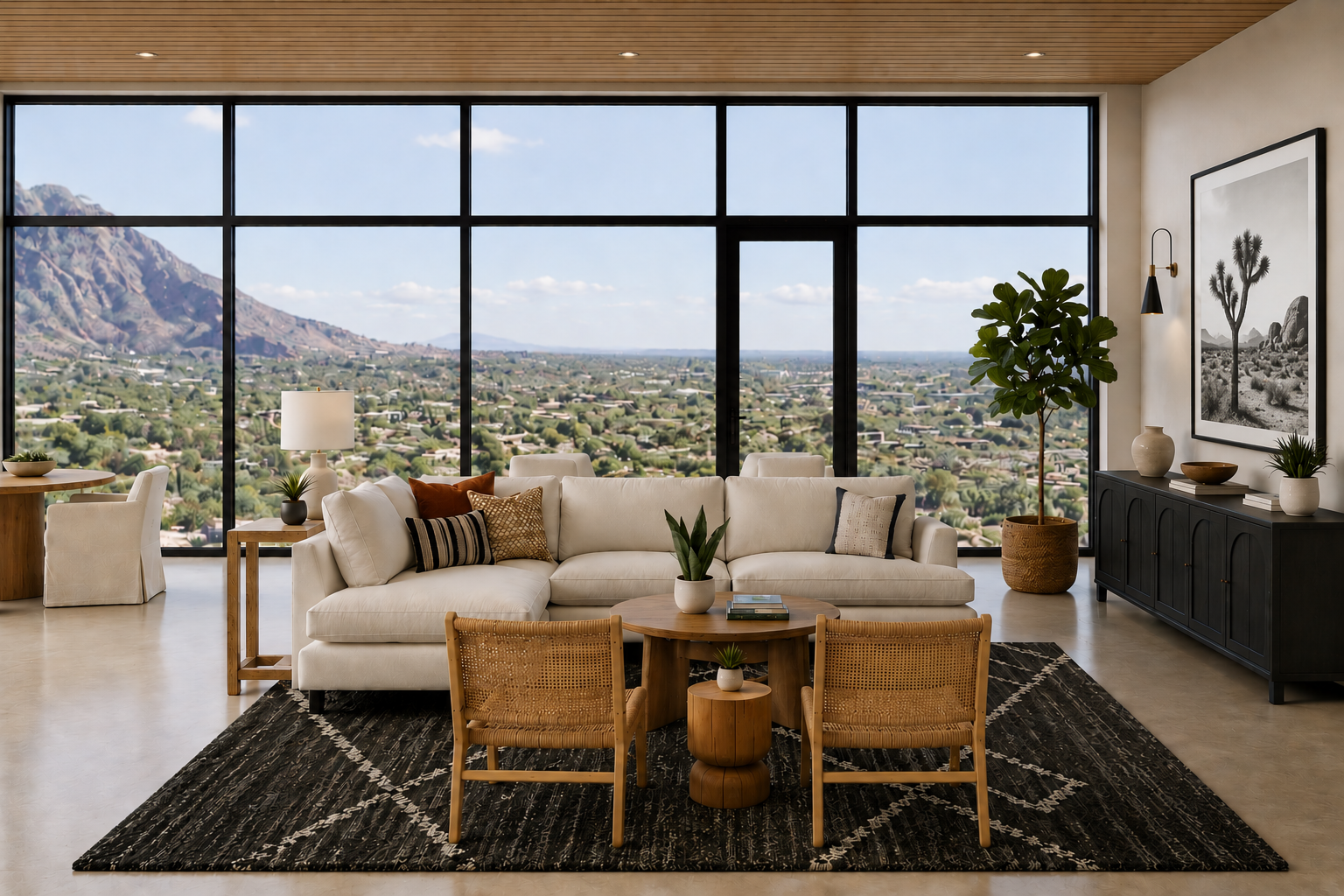
Modern organic living room designed by virtual interior designer Joshua Jones of JJones Design Co. featuring a balanced mix of masculine and feminine interior design elements through strong architectural lines, softer furnishings, natural textures, and warm contemporary styling. AI-generated rendering based on an original interior design concept by Joshua Jones.
How to Balance Masculine and Feminine Design Elements
Creating a balanced home does not mean every room needs an equal mix of masculine and feminine elements. In many cases, the most successful interiors lean slightly one direction while still incorporating enough contrast to keep the space feeling layered and comfortable. The key is understanding how different materials, shapes, colors, and textures interact with one another.
One of the easiest ways to create balance is through furniture selection. For example, a room with a large structured sofa and angular coffee table can feel more inviting when paired with softer elements like curved accent chairs, textured pillows, or linen drapery. On the other hand, a softer and more decorative space can benefit from darker wood tones, black metal accents, or stronger architectural lighting to add visual grounding.
Mixing shapes is another important detail. Straight lines and sharp edges often create a more masculine feeling, while curves and softer silhouettes tend to feel more feminine. Combining both helps a room feel more natural and visually dynamic. This is one reason arched doorways, rounded mirrors, curved sofas, and sculptural lighting have become so popular in recent years. They soften modern spaces without making them feel overly traditional.
Color palettes also play a major role in balancing a room. A darker and moodier space can feel warmer and more approachable when layered with lighter textiles, warmer woods, or softer accent colors. Likewise, a lighter room can benefit from deeper contrast through darker furniture, matte black finishes, charcoal accents, or natural stone materials to prevent the space from feeling too flat or overly delicate.
Texture is often where the balance truly comes together. Masculine interiors usually rely more heavily on hard surfaces like metal, stone, glass, or concrete, while feminine interiors often introduce softness through upholstery, rugs, drapery, and layered fabrics. The combination of these contrasting textures is what gives a room richness and depth.
Lighting is another powerful tool that can completely shift the feeling of a space. Strong architectural lighting and statement fixtures often add structure, while softer ambient lighting helps create warmth and intimacy. I often encourage clients to layer lighting throughout a home instead of relying entirely on overhead fixtures because it creates a much more inviting atmosphere.
One thing I always tell clients is that balance does not mean the space has to feel perfectly symmetrical or carefully calculated. Some of the most beautiful homes feel effortless because they allow different design elements to complement one another naturally. A room should feel collected and personal rather than overly themed around a single aesthetic direction.
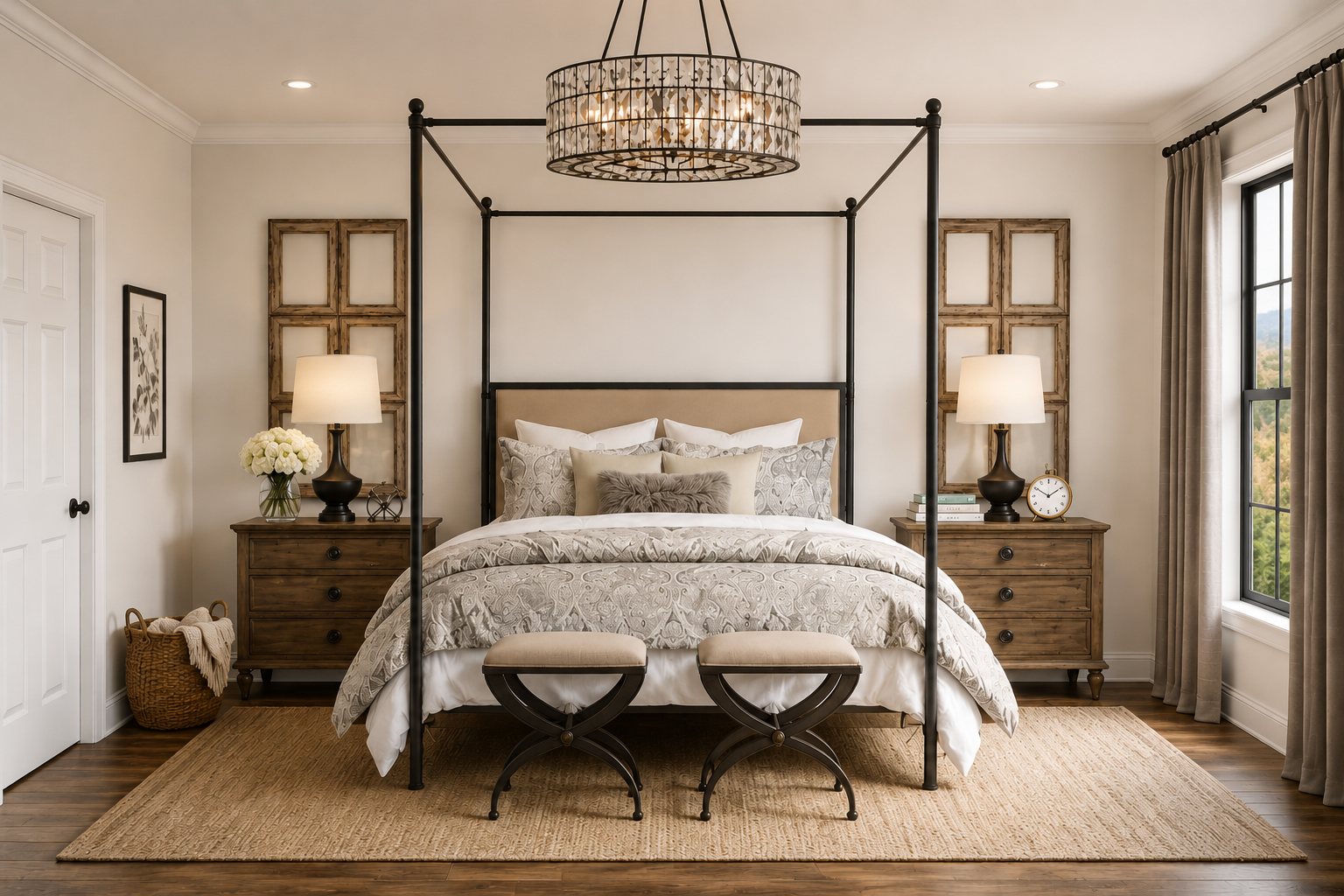
Rustic glam primary bedroom designed by virtual interior designer Joshua Jones of JJones Design Co. featuring a balanced mix of masculine and feminine interior design elements through a structured canopy bed, softer layered textiles, warm wood tones, and elegant lighting. AI-generated rendering based on an original interior design concept by Joshua Jones.
Common Design Styles That Naturally Blend Masculine and Feminine Elements
Many of today’s most popular interior design styles are successful because they naturally balance masculine and feminine elements together. Instead of leaning too heavily in one direction, these styles combine structure with softness, contrast with comfort, and simplicity with warmth to create homes that feel timeless and livable.
Modern Organic design is a perfect example of this balance. The style often features clean architectural lines, natural stone, darker wood tones, and minimalist styling that lean more masculine, while softer textiles, warm neutral palettes, curved furniture, and layered textures introduce a more feminine touch. The result is a home that feels calm, grounded, and inviting without feeling overly stark or decorative.
Scandinavian interiors also blend these elements beautifully. The simplicity and functionality of Scandinavian design create a strong sense of structure, while light woods, cozy textiles, warm lighting, and soft color palettes keep the spaces feeling approachable and comfortable. This balance is one reason Scandinavian interiors continue to feel timeless rather than trend-driven.
Japandi design takes a similar approach by combining Japanese minimalism with Scandinavian warmth. The clean lines and restrained styling bring a sense of calm and simplicity, while natural textures and softer organic elements prevent the spaces from feeling cold or overly rigid. Many people are drawn to Japandi interiors because they create a strong emotional sense of peace and balance within the home.
Mid-Century Modern interiors are another great example of masculine and feminine elements working together naturally. The style is known for its clean lines, architectural furniture silhouettes, darker wood tones, and structured layouts, which often lean more masculine. At the same time, Mid-Century Modern spaces frequently incorporate softer curves, warm color palettes, organic shapes, textured upholstery, and playful design details that add warmth and personality. This balance is one reason the style has remained incredibly popular for decades instead of feeling tied to a single era.
Modern Eclectic interiors often lean heavily into contrast, which naturally allows masculine and feminine elements to coexist together. You may see darker architectural details paired with soft upholstery, sculptural lighting mixed with vintage decor, or minimalist furniture balanced with layered textiles and artwork. When done well, the style feels collected and highly personal.
Even industrial interiors, which traditionally lean more masculine, have evolved significantly over the years. Many modern industrial homes now incorporate softer lighting, warmer woods, textured fabrics, greenery, and curved furniture to soften the harder materials like concrete, steel, and exposed brick. Without those softer layers, industrial spaces can sometimes feel too harsh for everyday living.
One thing I appreciate about these balanced design styles is that they tend to feel more adaptable over time. Homes that rely too heavily on one extreme often feel dated faster, while interiors that thoughtfully combine strength and softness usually evolve more naturally as trends change.
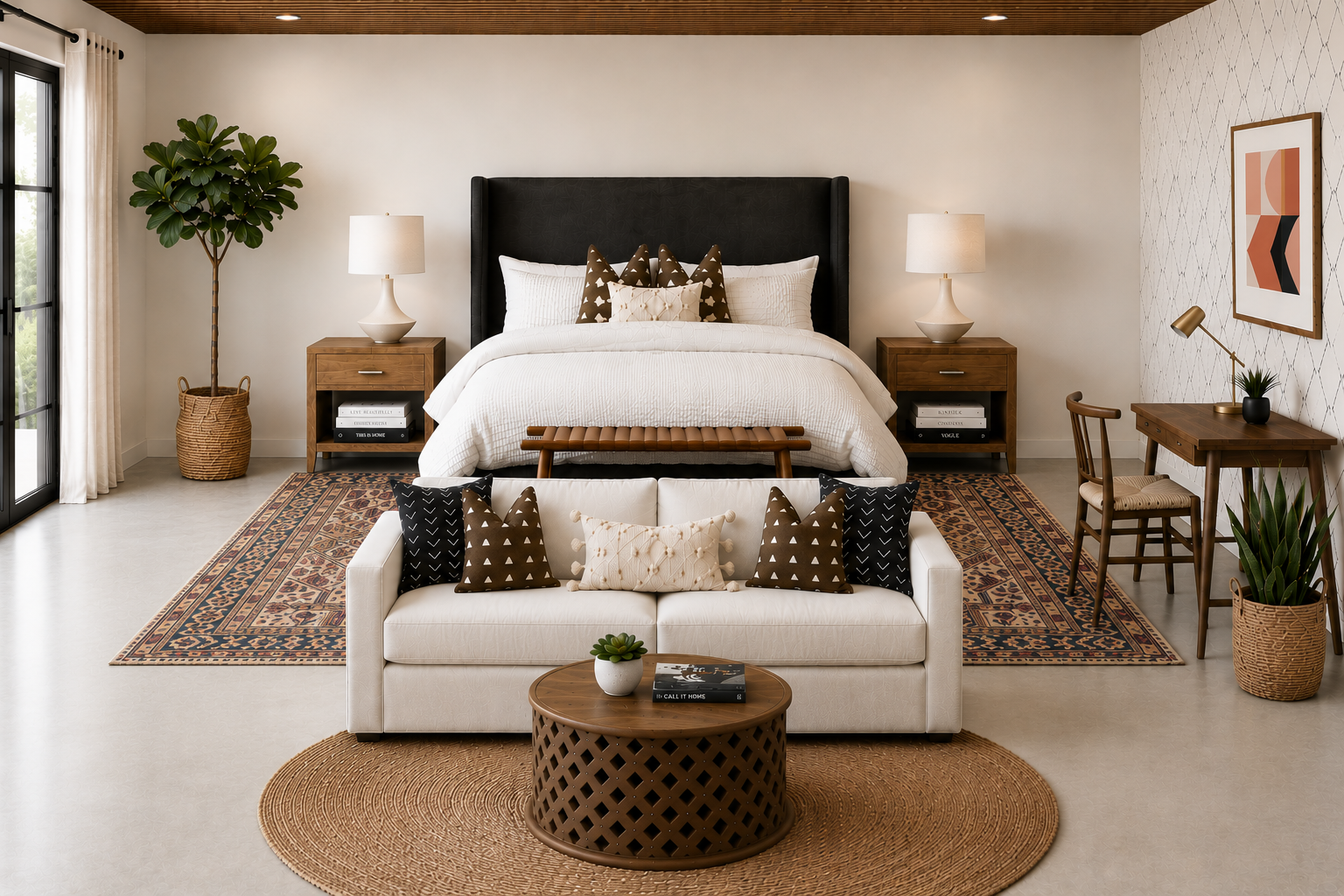
Boho chic primary bedroom designed by virtual interior designer Joshua Jones of JJones Design Co. featuring layered neutral textures, warm wood tones, contrasting black accents, and a balanced mix of masculine and feminine interior design elements. AI-generated rendering based on an original interior design concept by Joshua Jones.
Designing for Couples with Different Styles
One of the most common situations I run into as an interior designer is working with couples who have completely different ideas about how their home should look and feel. One person may prefer darker colors, cleaner lines, and a more minimal approach, while the other gravitates toward softer textures, lighter palettes, and a more layered aesthetic. This is actually far more common than people realize, and it does not mean the design process has to become a battle between two opposing styles.
In many cases, the most successful homes are the ones that find a thoughtful middle ground. Instead of focusing on whether a space feels masculine or feminine, I encourage clients to think about how they want the home to feel emotionally. Most couples ultimately want the same things from their space — comfort, warmth, functionality, and a home that feels relaxing at the end of the day. The design process becomes much easier once the conversation shifts away from labels and toward atmosphere.
One approach I often use is identifying which design elements matter most to each person. Sometimes one person strongly prefers darker moodier tones, while the other cares more about comfort and softness through textiles, lighting, and furniture shapes. Those preferences can absolutely coexist within the same room. A space can feature darker wood tones and black accents while still feeling warm and inviting through layered fabrics, softer lighting, and curved furniture.
Balance also becomes easier when there is a consistent overall direction guiding the home. For example, many couples naturally land somewhere within styles like Modern Organic, Scandinavian, Transitional, or Mid-Century Modern because these aesthetics already combine structure with softness in a very approachable way. These styles rarely feel too extreme in one direction, which makes them easier for multiple personalities to connect with.
Another thing I always remind couples is that not every room has to feel exactly the same. A home office may lean slightly moodier and more masculine, while a bedroom may feel softer and lighter. Shared living spaces often work best when they blend both approaches together so the entire home feels cohesive without becoming overly themed.
The most important part of designing for couples is creating a home that feels authentic to the people living there. Some of the most memorable homes are not the ones that perfectly follow a single style category, but the ones that reflect the personalities, routines, and preferences of the people who share the space every day.
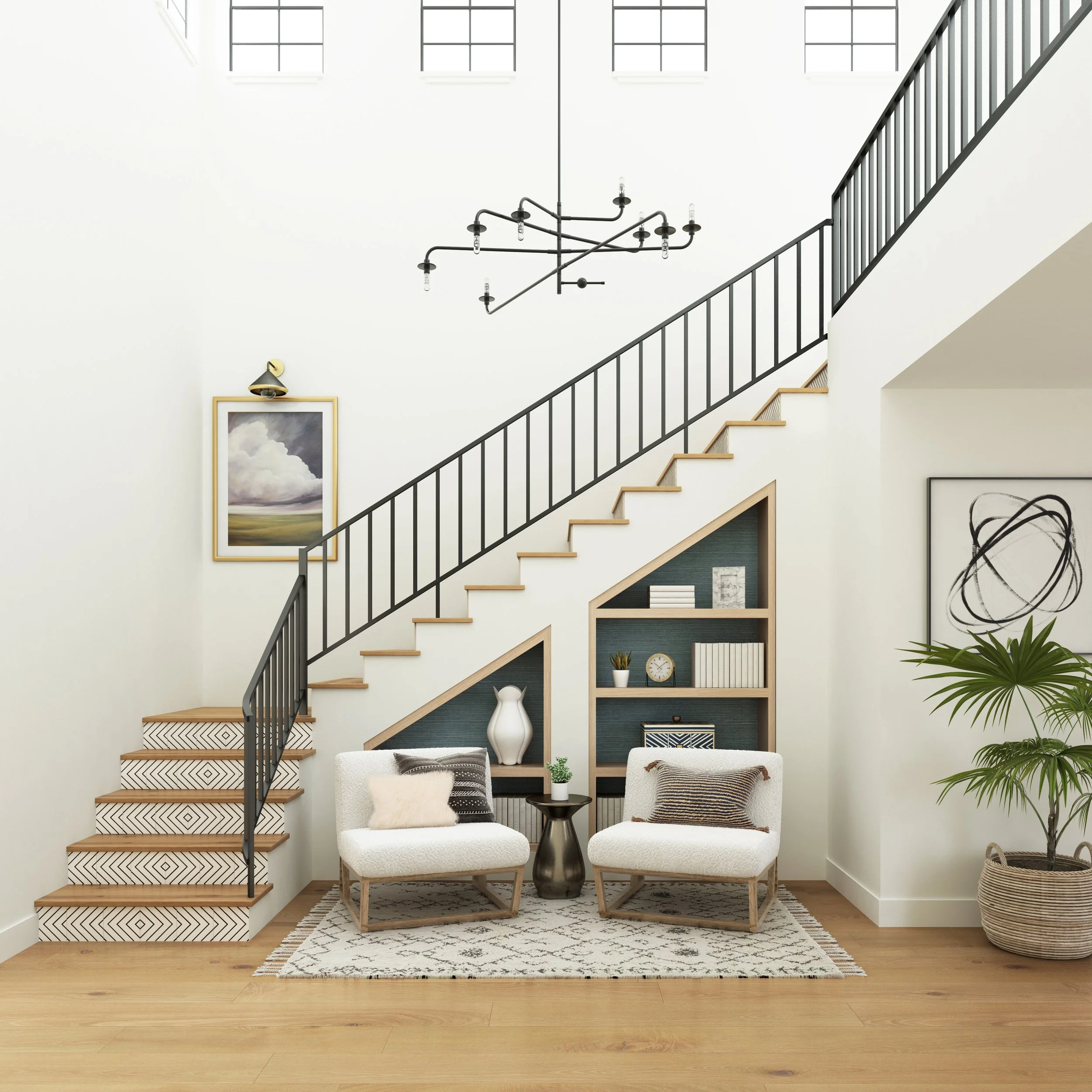
California casual foyer designed by virtual interior designer Joshua Jones of JJones Design Co. featuring a balanced mix of masculine and feminine interior design elements through strong architectural lines, softer textures, warm wood tones, layered neutrals, and relaxed contemporary styling.
The Emotional Impact of Balanced Interiors
The feeling of a home goes far beyond how it looks visually. Some spaces immediately feel calming and welcoming the moment you walk in, while others can feel cold, overwhelming, or disconnected even when they are beautifully decorated. In many cases, that emotional response comes from how well masculine and feminine design elements are balanced throughout the home.
Spaces that lean too heavily into hard materials, sharp lines, and minimal styling can sometimes feel visually impressive but emotionally distant. On the other hand, interiors filled with too many soft details, excessive layering, or decorative elements may begin to feel cluttered or overstimulating over time. The balance between structure and softness is often what creates a home that feels both sophisticated and comfortable to live in.
This balance also affects how people function within a space emotionally. Strong architectural elements and darker grounding tones can make a room feel secure, stable, and calming, while softer textures, warmer lighting, and curved forms help create a sense of comfort and relaxation. When these elements work together, the home tends to feel more natural and emotionally connected.
I think this is one reason why so many people are drawn to boutique hotels, luxury resorts, and thoughtfully designed hospitality spaces. The best interiors in those environments understand how to balance contrast, texture, lighting, and atmosphere in a way that feels elevated without becoming uncomfortable or intimidating. They often combine masculine and feminine design elements so seamlessly that most people do not consciously notice it — they simply respond to how the space makes them feel.
Balanced interiors also tend to age more gracefully over time. Rooms designed entirely around a trend or extreme aesthetic can start to feel dated fairly quickly, while spaces that combine warmth, structure, softness, and contrast usually remain visually appealing much longer. They adapt more naturally as personal tastes evolve and as new design trends come and go.
At the end of the day, the most successful homes are the ones that support everyday living while still feeling personal and inspiring. A balanced interior is not about following strict design rules or creating a perfectly equal mix of masculine and feminine elements. It is about creating a home that feels layered, welcoming, and emotionally comfortable for the people living there.
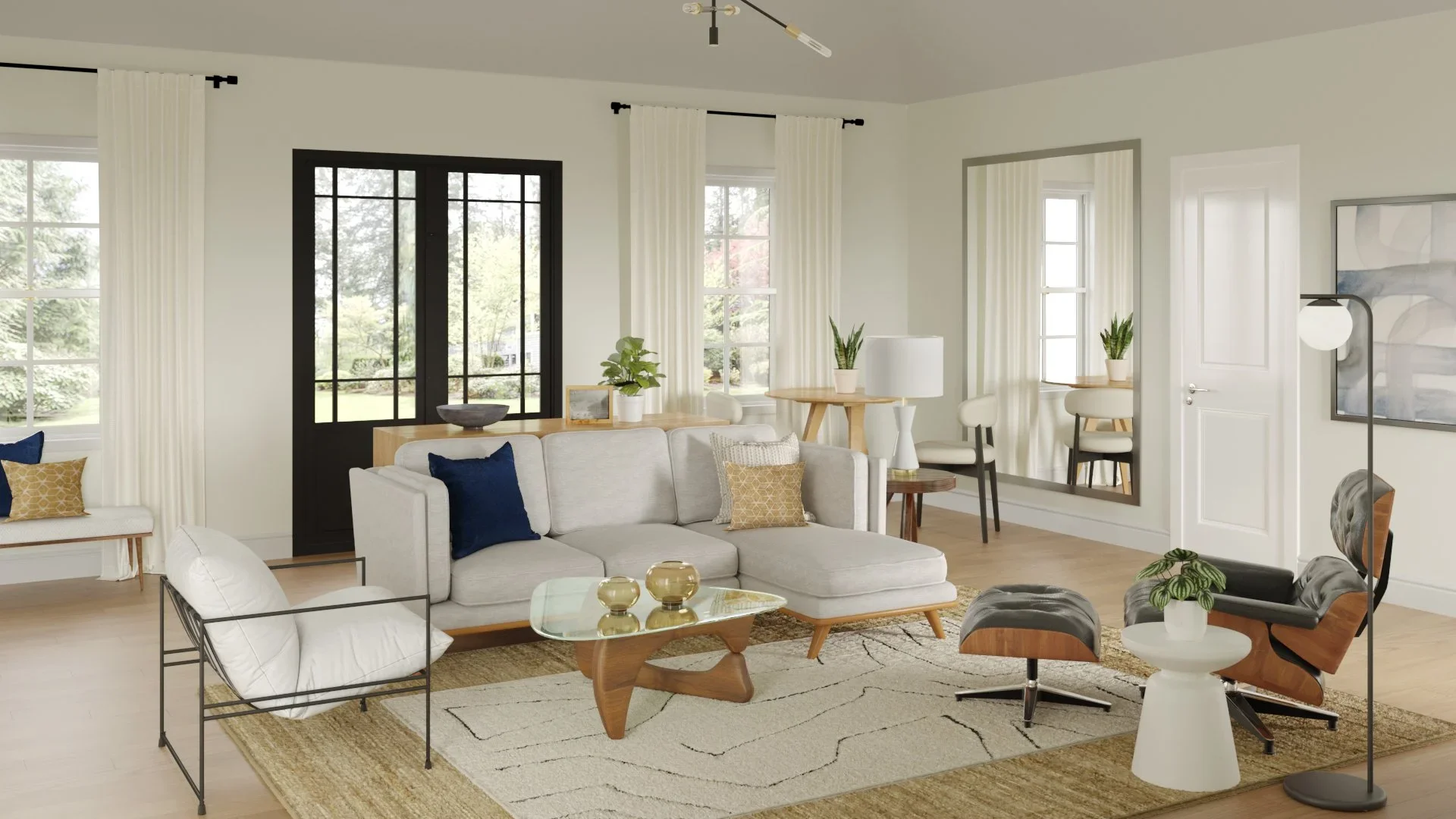
Mid-century modern beach house living room designed by virtual interior designer Joshua Jones of JJones Design Co. featuring a balanced mix of masculine and feminine interior design elements through warm wood tones, softer neutral textures, black architectural accents, and relaxed coastal-inspired styling.
Creating a Home That Feels Balanced and Personal
Masculine and feminine interior design are not about following rigid labels or designing a space specifically for one gender. At their core, these design approaches are simply different ways of shaping the feeling and atmosphere of a home. Some spaces feel more grounded, architectural, and structured, while others feel softer, layered, and relaxed. The most memorable interiors usually find a balance somewhere between the two.
One thing I have learned over the years is that homes feel the most comfortable and authentic when they reflect the personalities and lifestyles of the people living in them rather than trying to perfectly fit into a single category or trend. A space that feels personal will always feel more timeless than one designed purely around what is popular at the moment.
This is also why many modern interiors today naturally blend masculine and feminine elements together. Softer textures help warmer and moodier spaces feel more inviting, while stronger architectural details and contrast give lighter interiors more depth and sophistication. That balance creates homes that feel visually interesting while still remaining comfortable for everyday living.
Whether your style leans more modern, traditional, minimal, eclectic, or somewhere in between, understanding how different design elements affect the feeling of a space can help you create a home that feels more intentional and cohesive. Sometimes the smallest details — like adding softer lighting to a structured room or introducing darker contrast into a lighter palette — can completely change how a home feels emotionally.
At the end of the day, great interior design is not about making a home feel masculine or feminine. It is about creating a space that feels welcoming, personal, functional, and connected to the people who live there. Those are the homes that tend to leave the strongest lasting impression long after trends fade away.
Frequently Asked Questions About Masculine and Feminine Interior Design
Can masculine and feminine interior design styles work together?
Absolutely. In fact, many of the most timeless interiors naturally combine both masculine and feminine elements together. Spaces often feel more balanced and inviting when stronger architectural details, darker tones, or structured furniture are softened with layered textures, warmer lighting, curved shapes, and comfortable textiles.
What colors are considered masculine in interior design?
Masculine interiors often lean toward deeper and more grounded color palettes such as charcoal, black, navy blue, olive green, taupe, warm gray, and rich wood tones. However, masculine spaces are not limited to dark colors. The overall feeling usually comes more from contrast, structure, and materials rather than a specific color alone.
What makes a room feel feminine?
Feminine interiors often feel softer, warmer, and more layered visually. Curved furniture, softer lighting, textured fabrics, lighter palettes, and decorative details all help create a more relaxed and inviting atmosphere. Modern feminine interiors today are typically much more refined and balanced than overly decorative traditional interpretations.
Is Modern Organic style masculine or feminine?
Modern Organic interiors usually blend both masculine and feminine elements together naturally. The style often combines stronger architectural lines, natural stone, darker woods, and minimalist structure with softer textures, warm neutrals, layered fabrics, and organic shapes. This balance is one reason the style has become so popular in recent years.
Can minimalist interiors still feel warm and inviting?
Yes. Minimalist interiors can still feel comfortable and welcoming when texture, lighting, natural materials, and softer details are layered thoughtfully throughout the space. Without those elements, minimalist homes can sometimes feel cold or sterile, which is why balance plays such an important role in modern interior design.
Need Help Creating a Balanced Home?
One of the most rewarding parts of my work as a virtual interior designer is helping clients create homes that feel personal, balanced, and reflective of their lifestyles. Whether your style leans more modern, minimal, warm, layered, masculine, feminine, or somewhere in between, the goal is always to create a home that feels cohesive, comfortable, and timeless.
I work with clients across the United States and internationally through my virtual interior design services, helping homeowners create thoughtfully designed spaces tailored to how they truly live. From single-room refreshes to larger home projects, I focus on creating interiors that feel elevated while still remaining approachable and livable for everyday life.

